
UNDER CONSTRUCTION

Matcha FAQs

Here is where you describe what your website is about.

What is matcha?

Matcha is finely ground Japanese green tea. Unlike regular green tea, where the leaves are steeped and removed, with matcha you consume the whole tea leaf in powdered form. This gives matcha its distinctive flavour, colour and naturally occurring caffeine.

Where does your matcha come from?

Our Hana and Mori matcha are sourced from Yame, Fukuoka, Japan, an area well known for producing high-quality Japanese tea.


What is the difference between Hana and Mori?

Hana – Everyday Matcha

Our more approachable everyday matcha.

Smooth and balanced with a gentle nutty character, perfect for your daily matcha, especially lattes.

Mori – Special Reserve

Our more premium and complex matcha.

Mori has a fragrant nutty aroma, rich layered umami and lingering natural sweetness, with remarkably low bitterness and astringency. Its smooth, creamy texture makes it beautiful as Usucha and deep enough for Koicha.

Which matcha should I choose?

If you mainly drink matcha lattes, we recommend starting with Hana.

If you enjoy drinking matcha with water, appreciate deeper umami and complexity, or simply want something more special, choose Mori.

Of course, there are no strict rules — drink your matcha the way you enjoy it.


Is your matcha ceremonial grade?

The term “ceremonial grade” isn't an official grading system in Japan.

We prefer to describe our matcha by its origin, flavour profile and how we recommend enjoying it rather than relying only on this term.

Our matcha has been carefully selected for drinking, not simply for cooking or baking.


How much matcha should I use?

We recommend around 2–3g of matcha per serving.


For a stronger latte, you can increase the amount depending on your personal taste.


Visit our dedicated page on how to make matcha step by step with a video walkthrough.

Learn More

What water temperature should I use?

Avoid boiling water, as very hot water can bring out more bitterness and astringency.


We recommend water at around 70–80°C.


Visit our dedicated page on how to make matcha step by step with a video walkthrough.

Learn More

How do I make matcha?

Visit our dedicated page on how to make matcha step by step with a video walkthrough

Learn more

Why should I sift my matcha?

Matcha powder is extremely fine and naturally forms small clumps. Sifting helps create a smoother drink and makes whisking much easier.

It only takes a few seconds, but it can make a big difference.


Image placeholder

Can I make matcha without a bamboo whisk?

Yes.


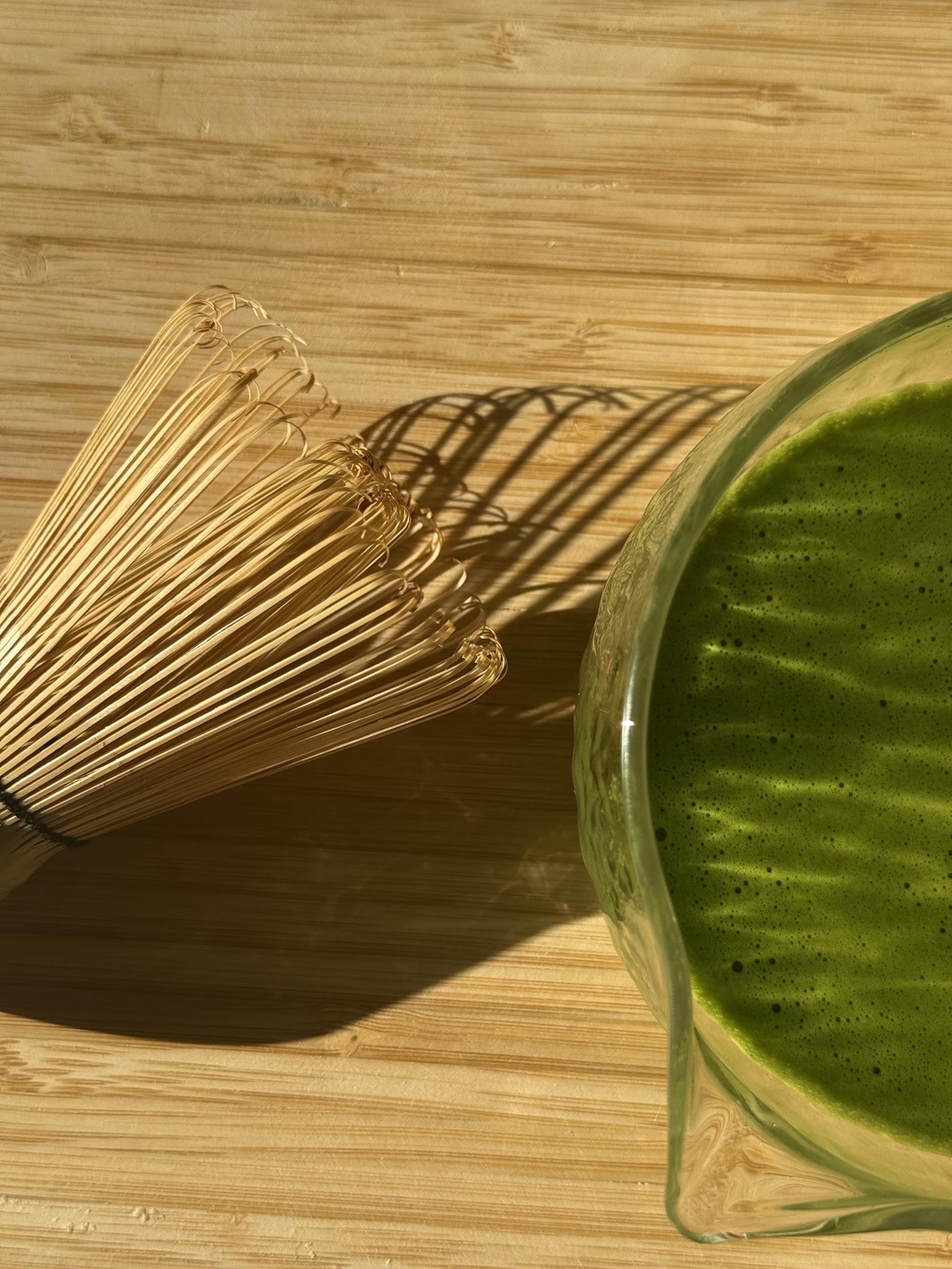
A traditional bamboo whisk, or chasen, gives a beautiful texture, but you can also use an electric matcha whisk or frother if you don't have one.


The most important thing is making sure the powder is fully mixed and smooth.


For thick micro-foam, we do recommend using a chasen.

Explore

Which milk works best with your matcha?

This comes down to personal preference. Dairy, oat, soy and other milk alternatives can all work beautifully.

We suggest choosing a milk that isn't overly sweet or strongly flavoured so you can still taste the character of the matcha.

Should I add sweetener?

Good matcha doesn't need to be heavily sweetened.

If you prefer your matcha a little sweeter, we recommend a touch of maple syrup. Its gentle sweetness complements our matcha without overpowering its natural flavour.


Does matcha contain caffeine?

Yes. Matcha naturally contains caffeine because you consume the whole ground tea leaf.

The exact amount can vary depending on the tea and how much powder you use.


Why does matcha sometimes taste bitter?

Matcha naturally has some bitterness and astringency, but excessive bitterness can come from the quality of the matcha, using too much powder, water that is too hot, or the way it is prepared.

Try lowering your water temperature and adjusting the amount of powder to find your preferred balance.


How should I store my matcha?

Matcha is sensitive to heat, light, air and moisture.

Keep your matcha tightly sealed and store it somewhere cool and dark. For longer-lasting freshness after opening, we recommend keeping it refrigerated in an airtight container.


Can I use matcha straight from the fridge?

We recommend allowing the sealed container to come closer to room temperature before opening it. This helps reduce the chance of condensation and moisture getting into your matcha.

Always make sure your spoon is completely dry.


How quickly should I drink matcha after opening?

Matcha is at its best when fresh. Once opened, we recommend enjoying it within approximately 4–6 weeks for the best aroma, colour and flavour.


Why isn't every matcha bright green?

Colour can vary naturally depending on the cultivar, where it was grown, growing conditions, shading, harvest and processing.

A beautiful green colour can be an indication of quality, but colour alone doesn't tell the whole story. Aroma, umami, sweetness, bitterness, astringency and texture all matter too.


Can I use Sawasdee Matcha for baking?

You can, but our matcha has been selected primarily for drinking.

For cakes, cookies and other recipes where the matcha is mixed with many ingredients, a culinary-grade matcha may be a more economical choice. We'd rather you save the good stuff for your cup!

Sign up to our newsletter because we may offer this in the future.


Image placeholder

Can I visit Sawasdee Matcha and try it before buying?

Absolutely. Come and visit our little Sawasdee Matcha café in Shrewsbury.


You can experience our matcha prepared by us, discover the differences between our powders and find the one that suits your taste.


And if you're new to matcha, don't worry — we'll happily help you find your matcha.

Visit Us